
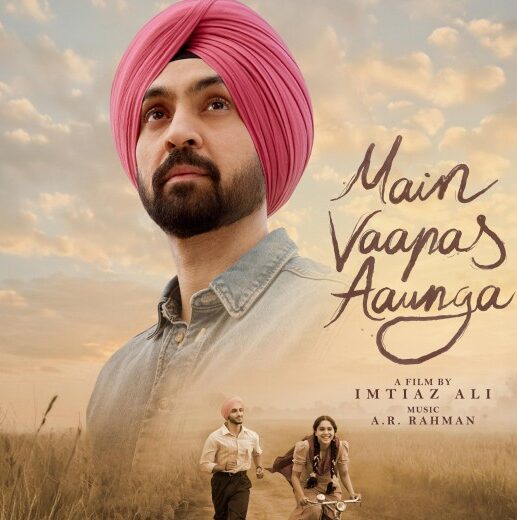
Main Vaapas Aaunga: When Love Becomes the Way Home
I watched Main Vaapas Aaunga last night, and I have been sitting with it ever since.
It is being described as a Partition-era love story.
But I feel that description is far too small for what this film is actually touching.
What is particularly poignant for me is that it has arrived at almost exactly the same time as this year’s theme for our Truth and Reconciliation work: the Partition of Nations.
And now I hear that another Hindi film is coming called Batwara — another word for Partition.
It makes me wonder whether something is stirring in the collective field. Whether, seventy-nine years after 1947, something whose time had not yet come is finally ready to be seen.
India began formally observing 14 August as Partition Horrors Remembrance Day in 2021, one day before Independence Day.
Perhaps it has taken three generations for us to develop enough distance, enough language, and perhaps enough capacity, to begin looking directly at what our grandparents’ generation endured.
And what they did to one another.
The horrors of Partition are almost impossible to comprehend. Every community experienced unimaginable suffering, and every community, in different places, participated in unimaginable violence. And women bore some of the most unspeakable forms of it.
As a woman watching this film, there were moments when my heart was simply breaking.
And yet something else was happening.
My heart was also breaking open.
Because beneath the story of Partition, beneath the story of a Sikh boy and a Muslim girl, I felt that Imtiaz Ali had touched something much deeper.
This is not really a story about the love between two people.
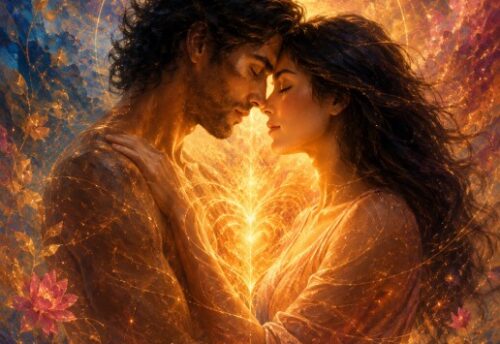
It is a story about Love itself.
The young couple becomes almost a placeholder for a much larger possibility: that love can survive what hatred does to human beings.
That innocence can survive history.
That something in us remains untouched even by the worst things we are capable of doing to one another.
And perhaps this is the deeper message of the film:
The answer to radical horror may have to be radical love.
Not romantic love.
Not sentimental love.
But Love as a force of consciousness — the capacity to recognise the humanity of the other even when history has taught us to see the other as an enemy.
Because what else can heal the depravity that human beings are capable of inflicting upon one another?
We cannot undo what happened.
But perhaps we can transform what it continues to do to us.
And this is where another profound theme in the film touched me: the way unhealed pain travels through generations.
There is a phrase we often use in our work:
Pain that is not transformed is transferred.
The protagonist, played by Diljit Dosanjh, seems to carry a kind of restlessness he cannot explain. He cannot settle. He moves from place to place, from one job to another, as though somewhere inside him there is an invisible refugee who has never found home.
And slowly he begins to recognise that perhaps this is not entirely his story.
Perhaps he is carrying the trauma of his grandfather.
A refugee who lost his home, his belonging, his world.
And suddenly the strange behaviours of one generation can begin to make sense when seen through the wounds of another.
This is such an important insight for all of us.
Because we may think that our anxiety, our inability to settle, our patterns in relationships, our fears, our compulsions, our sense of not belonging — whatever our particular expression may be — belongs entirely to us.
But what if some of what we carry is older than our own biography?
What if our bodies, our nervous systems, our families and our cultures carry stories that were never spoken?
What if we are sometimes living out the unfinished emotional history of those who came before us?
This is why I believe the work of healing is so much larger than personal wellbeing.
My new book, Healing Leaders: Seven Steps to Recovery of Self, with Raj Sisodia, was published earlier this year, in January.
The seventh step is Heal Yourself.
But healing yourself is not simply about making yourself feel better.
It is about recovering the lost parts of yourself.
It is about healing family trauma.
It is about beginning to transform ancestral and intergenerational pain.
It is about recognising the historical and collective wounds that we carry as communities, nations and civilisations.
Because until someone stops the transmission, the trauma continues.
Someone has to become the place where the pattern ends.
Someone has to say:
It ends with me.
I will not pass this pain forward.
I will feel it.
I will understand it.
I will grieve it.
I will transform it.
And I will give the generations that come after me something different to inherit.
Perhaps this is why the title Main Vaapas Aaunga moved me so much.
“I will come back.”
At one level, it is about returning to a lost home.
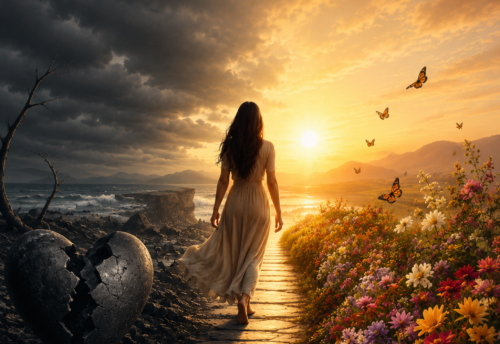
But perhaps at another level, it is about humanity finding its way home.
Home to belonging.
Home to innocence.
Home to compassion.
Home to the remembrance that before we were Hindu or Muslim, Sikh or Christian, Indian or Pakistani, victim or perpetrator, we were — and remain — human beings.
And perhaps ultimately, home to Love.
This is why I would invite you to watch this film.
Don’t watch it simply as a Partition film.
Don’t watch it simply as a love story between a Sikh boy and a Muslim girl.
Watch it as a meditation on what happens when human beings forget their humanity — and what might bring us back.
Because perhaps the story of Partition is not only behind us.
Its unhealed pain is still moving through families, through communities, through nations, through generations.
And perhaps that is why it is surfacing again now.
We are being invited to look.
To remember.
To grieve.
And finally, to transform.
The microcosm is the macrocosm.
When one human being heals something deeply within themselves, something in the larger field is healed too.
We may never know exactly how.
But every wound we consciously transform is one less wound we transmit.
Every inherited fear we release is one less fear our children have to carry.
Every act of forgiveness, compassion and love becomes part of the architecture of a different future.
And perhaps that is how reconciliation really happens.
Not all at once.
Not through one grand gesture.
But one human being at a time.
One family at a time.
One generation at a time.
Until, slowly, we find our way back.
Vaapas.
Home.
– Nilima Bhat

Leave a Reply